Episode Transcript
Jill Brook: [00:00:00] Hello, fellow POTS patients, and marvelous people who care about POTS patients. I'm Jill Brook, your horizontal host, and today we have an episode of the POTS Diaries with Jace. Jace, thank you so much for being here.
Jace: Thank you so much for having me.
Jill Brook: All right, so for starters, maybe help us get to know you a little bit.
Who are you, where are you, all that good stuff.
Jace: Yeah, so my name's Jace. I live in Nashville, Tennessee. I am someone who works in mental health and health policy. I have a cat named Moon, so I'm a Cat dad and yeah, I'm just, I'm honestly just a total nerd all around. So.
Jill Brook: Cool. Tell us more about that. Um, what are you into, what are your, um, so favorite?
Jace: I'm, I'm. I'm definitely into like, comic books and like Marvel and all that fun stuff. But I'm also just an, an academic at heart, so I do a lot of research and a lot of research into just health policy generally, [00:01:00] so.
Jill Brook: Oh, very cool. Can you talk more about that? Like, so when you say health policy, what, what do you do?
Jace: Yeah, so I work in, uh, mental health currently, but before that I did a lot of my degree in, um, specifically LGBTQ+ health. And I worked specifically in a lab that studied that policy and like how impacts of policies occur and why they occur, why these policies happen, where they come from, all that kind of fun stuff.
And just genuinely got to know what it was like to work both as an academic and as someone who was impacted directly and did direct impact work as well. So I worked up at the legislator in Tennessee and I also worked at the US Senate level on disability policy. So I've done quite a few things in policy. I've, again, just very endeared by it, so yeah...
Jill Brook: Wow, [00:02:00] that's really cool. And maybe we can come back to that in a minute, but but first can you tell us about your personality? Like, how would people describe you?
Jace: I, I actually had to ask one of my friends this, 'cause I was like, I don't know how to describe myself at all.
So I was told that I am funny, that I'm a good friend, that I'm a fighter, and that I'm someone who cares deeply about others. So I, I appreciate the friends that were willing to answer that question for me.
Jill Brook: Very cool. Very cool. Okay, so did you have a life before POTS, and if so, when was that and what did it look like?
Jace: Yeah, so I did have a life before POTS and I didn't get diagnosed until I was 22. I am 24 now. But my life before POTS was probably before the age of about 16. And before then I just kind of was, you know, growing up normally and didn't really experience health issues, uh, all that [00:03:00] often, or I thought so. Because I'm also diagnosed with Ehlers-Danlos Syndrome, and as we know, they like to come together. So I thought that the joint dislocations and all that kind of stuff were just normal and that they were growing pains and all that kind of fun stuff. And turns out it wasn't. But I didn't start developing POTS symptoms until I was about 16 and after that point I didn't, like I said, didn't get diagnosed till later, but for years I just had no idea what was going on.
Jill Brook: Wow. And did other people notice things too, or like, was it just you in your head saying like, geez, I'm awfully dizzy here, or like kind of, yeah, what, what was that like during the time when you didn't have an explanation but you had symptoms?
Jace: So it was definitely noticed by others, but it was one of those things where no one had a name or an understanding of what actually was going on. So there was just [00:04:00] confusion all around for everyone, and that included myself. So I remember I ended up in the hospital multiple times and I have a specific memory of being in the hallway in a hospital bed and getting up to go use the bathroom and one of the nurses going, oh my gosh, your heart rate just jumped up like super high. Can you do that again? Go lay back down and then do that again. And at that point, they still didn't have a name for it. They still didn't understand what was going on. They just were like, that's super weird. Anyways, I guess everything's still normal, and I got sent on my way. Um, and so I would end up back in the hospital multiple more times with the whole dehydration, I'm putting that in air quotes, but like dehydration. And yeah, it just went on and on for years without being really understood.
Jill Brook: Wow. Wow. And so what were your worst symptoms at those times?
Jace: Definitely lightheadedness and the [00:05:00] heart rate feeling, 'cause I could feel it in my chest whenever my heart rate would get too high. And it was super uncomfortable and it still does get uncomfortable at times. And so between those two symptoms, I definitely was struggling quite a bit.
Jill Brook: Mm-hmm. Yeah. Okay. So then what made you finally get answers and a diagnosis?
Jace: So for a while it was like going to doctors and explaining what was going on and them not having answers until I finally got to a doctor that was at my college's clinic, um, when I was getting my master's degree.
And she started recognizing kind of a pattern of, you know, I was having Ehlers-Danlos type symptoms. I was having POTS like symptoms. She couldn't diagnose it though. So she sent me to someone else that could diagnose it and I got the diagnosis of Ehlers-Danlos and POTS at the exact same time because they just immediately [00:06:00] recognized it and were like, yep, this is, this is what you have.
And that was, again, back when I was 22. So it's been about two years now, um, since I've been diagnosed. And I didn't get treatment for it though until this past couple of months actually. Because it just was really difficult to get into any kind of clinic or find any doctor that understood it. And so I just went years trying to understand how to deal with the symptoms by myself.
And it was good to have a name for it, but it was just really difficult to deal with it on my own.
Jill Brook: Oh man. That's a little frustrating though. So they just said, congratulations, we can name your problem. Good luck managing it
Jace: Basically, yeah. They, they, um, they've of course suggested I try and get it to an autonomics clinic and I am nearby, and since I'm in Nashville, I'm nearby one of the largest medical centers in the South, [00:07:00] which is Vanderbilt, and they have a really long wait list though. And it's even worse whenever you miss a call from them because you won't get another call back for months on end. And so it was just a cycle of trying to get in and then missing a call and then having to wait more months to get in.
So I had one of those moments where I was like, screw it, I'll just deal with this myself. And then I got really lucky in the fact that I got a suggestion for a primary care doctor after I graduated grad school that dealt with patients with hypermobile Ehlers-Danlos Syndrome and POTS, and he has been fantastic.
And he was like, there's no reason why we haven't started you on medication, so let's get you started on something that can help relieve some pain for you. So he has been a blessing in all this, but it just took a really long time to get there.
Jill Brook: Wow. Okay, so you had a couple years on your [00:08:00] own and now that you do have somebody who's willing to treat you have, have you tried anything yet that made a big difference?
Jace: I've tried a couple medications and the medication that I'm trying right now is propranolol and it's made some difference. It's just that it, it's not at the right dosage, I don't think. I think we still need a little bit more work on it, but you know, just having any influence on these symptoms at all has been lifesaving for me because for me the symptoms could be quite debilitating of, you know, getting too lightheaded to stand up, getting too dizzy to do anything, feeling too faint because I am one of the POTS patients that do faint at times, and just the overall feeling of your heart racing is scary and uncomfortable. Just having that medication help at all is, is just fantastic.
Jill Brook: Yeah. Yeah. And hopefully you still have a lot more things to keep [00:09:00] trying and a lot more runway to feel better. So you managed to get through college and grad school with with all this going on. Is that right? How, how did you manage, how, how did you, like I remember, I remember college and grad school being a time when I also was quite dizzy and lightheaded, and I would just like, very slowly, I'd call it more like deflate. Like I, I, I wasn't yet, I, I fainted later on, but at that point it was just like I could not sit up straight. My, my brain would kind of go and I'd kind of slump down on one arm and I just absolutely could not stay conscious for like more than, I don't know, an hour. And as you know, it made me drop out of a PhD program eventually, 'cause I just thought I was bored. In fact, I went to the school, I think career counseling, and I, I told them I was having trouble, you know, staying conscious in class and they were like, oh, you must have just [00:10:00] chosen something that you're not interested in. What, what are you interested in? Go do that. And so that would, you know, delay me another few years. But, so it kind of resonates, but, so how did you get through, through all this schooling doing this?
Jace: So originally in college, because I had been medically gaslit into thinking of it as anxiety or thinking of it as just dehydration, I took that and I applied it to myself. And I was just like, yeah, I'm just being lazy. Like I just gaslit myself into being like, oh yeah, that must be it. And I was definitely both relieved and also shocked to be like, there's a name for this when I got to grad school. But when I got to grad school, at that point the symptoms had gotten worse because they were not being treated, and I definitely struggled a lot more. I was actually kind of thankful for the fact that during my grad school experience, I had some classes that were still online and so I got [00:11:00] to, you know, be horizontal while being in those classes instead of having to sit up in person for hours on end. But for some of the classes that I had, I did have to sit there for like four plus hours and I would just end up like leaning over the table and just trying my best to, to stay up and, you know, obviously have some electrolyte drinks and maybe a little bit of caffeine 'cause I, I do still like dabble a little bit in caffeine. But like, it was definitely not easy. It was a lot of getting support from the people around me, um, especially after my diagnosis of, okay, something is truly wrong and I need extra support, and how am I gonna do this? So that was probably one of the biggest key components was getting support from people around me, and that included people in my program and the professors in my program, because I was able to let them know like, hey, I have a name for this now. I'm not just [00:12:00] like falling asleep in your class. I genuinely might just need a moment, and I got accommodations that way, which was super helpful. I also was able to get accommodations and the fact that I would get like extensions on assignments because a lot of times the classes would go really, really quickly because they were trying to fit so much content in such a little amount of time.
Obviously in grad school it's just so much all at once. And so I just needed some extra time, 'cause there may be ADAy where I'm doing great, and then the next day I can't get outta bed. It's not realistic for me to expect myself to be able to do the 20 pages of assignments that are due the next day if I can't get outta bed.
So that, that was another huge part of it, was just being able to ask for help when I needed it, from both the people I love and the people in the program.
Jill Brook: Do you think that you did ask for help or would've been able to ask for help before you [00:13:00] had a diagnosis or a name for it?
Jace: I don't think so, genuinely, because I had just given up a little bit on the fact that there was something wrong and I had just been so convinced by others that it was anxiety or it was just dehydration and I just needed to drink more water that I just, I, I didn't believe that there was anything else to look for. And I knew in the back of my mind though, because I still did talk to doctors and I still did kind of reach out to those doctors, but I, in the forefront of my mind was still gaslighting myself into believing that, okay, I just need to get through today. And for today it's just anxiety.
Jill Brook: Yeah, so I would be curious to hear your thoughts like from a policy perspective on this, 'cause I have thought about this a lot, which is that, so POTS is an example of something where there's a lot of us who [00:14:00] have all kinds of symptoms that come and go. It might take years, if not decades to get a diagnosis and a lot of opportunities and, and things open up once you have that diagnosis, but why shouldn't people get the same accommodations or opportunities for having the symptoms if they just don't have a name for it. And it's, it's always bothered me a lot, especially because some of the tests are so imperfect or you hear about people who don't get a POTS diagnosis because their heart rate only went up 29 beats per minute on the tilt table test. And is anybody talking about that or when it comes to like policy for health, is it very much based on diagnoses and test results that are hard to get or imperfect?
Jace: I truly see that like the model, especially in education, health policy is very [00:15:00] biomedical only. And when we say biomedical, it's very much just, oh, you have to have a certain diagnosis because if you don't have that diagnosis, then you're taking advantage of the system. When the reality, the reality is, is that if someone needs accommodations in order to succeed, they need accommodations in order to succeed. And that diagnosis doesn't really matter as much or shouldn't matter as much. But because of how schools have taken into account the ADA and made their own policies about what that should look like, they have really made it into that biomedical model of you have to have a diagnosis or we're not gonna take you seriously. In my opinion, I think that people should still have access to accommodations based off of symptoms. And the thing is that if you are so worried about people taking advantage of the system, you could still ask for, you know, documentation of these symptoms and still get those accommodations.[00:16:00]
Because there are so many students who are in the process of diagnostics that take years, whether it's POTS, whether it's autism, whatever, it may end up being, that, you know, you're missing out on really great opportunities for that student based off of the fact that you're looking strictly for only an ICD 10 code, right?
So that, that is something that I feel like in the future should be the point of discussion really. But unfortunately, we're still even trying to get education systems to understand now that people with diagnosis and people with accommodation needs should get them. It's, it's, it's one of those things where it's just like we're still falling behind in that area, especially in the United States specifically. I'm not as sure about what it looks like in other countries, but I do know that there are not looser standards, but less strict standards in other [00:17:00] countries than the US.
Jill Brook: Mm-hmm. Yeah, because it's almost like a patient has their life made worse by the symptoms, then they have it made worse by the fact that maybe none of their doctors can figure out what they have. And then it's made worse by the fact that until those doctors figure out what they have, their teachers or employers won't really consider giving them any accommodations. And it's so not their fault that nobody's found a name for what they have yet. That really pains me.
Jace: Yeah. It, it pains me too because it's like, again, like I, I just remember being in college and like both in my work and in my schooling, I was struggling so bad and no one was able to help me. And I remember, I did reach out for accommodations at one point and I was told that I didn't have enough documentation.
I didn't have [00:18:00] enough to prove that I actually needed it. And that's really difficult to hear because it then puts the blame back onto the student or the worker, when in reality it's a systematic issue.
Jill Brook: You know, that's so interesting that you basically, you said a magic word documentation, which I've learned and you know, like I'm over 50 years old and it took me this long to learn, like I have some appointments where I go to my doctor and they say, they say, okay, what are you here for today? And I'm like, I'm just here to document some stuff because I've realized that a lot of this is a documentation game. And they're like, yep, that's right.
Jace: Yeah, it's, it's wild. It's really wild.
Jill Brook: Yeah. Oh, that's so interesting. So, so is there anything else that comes up in the world of like, medical policy making that I don't know has felt relevant to you or that you think about in your journey?
Jace: Yeah, so when I think about POTS and I think about basically like how we [00:19:00] have not advanced the ADA since the nineties. I do think about them together a lot because we have so much work to do in making specific policies under the ADA, and we have so much work to do when it comes to employment policy and when it comes to general like treatment of patients with lesser known disorders, even though POTS is a common disorder, still lesser known. And you know, one of the things that bugs me a lot is the fact that without the ADA we wouldn't be able to get any accommodations, unfortunately, but with the ADA, there's still the ability to discriminate against a person with a disability under employment law, using things like 14 C certifications, which says that if you hire a disabled employees, then you are allowed to pay them less than minimum wage in a lot of states still.
And so it's a form of [00:20:00] sub minimum wage. And if your business gets the certification, then you're allowed to treat someone as lesser than an able-bodied person. And a lot of this has been used in what would be considered kind of like workshop kind of areas in which they tell the families of these disabled individuals that this is a safe space for them,
this is to help them grow and all this kind of stuff, when in reality it's again, going into that system of like, you're not being paid enough, so you're not gonna be able to live on your own and you're gonna be relying on this system continuously over and over again. And it creates a cycle. While we have evidence and proof that, you know, treating disabled people equally, I know shocker, actually allows for disabled people to thrive. And I bring this back to POTS because of the fact that with lesser known disorders and with disorders like [00:21:00] ours where we often need certain accommodations, and we're being told that we're a lesser than employee, there are more opportunities for businesses to take advantage of POTS patients and take advantage of those with lesser known disorders because of the fact that they're, they're already convinced that, you know, I don't have the same ability as someone else, therefore I shouldn't have the same job as someone else. So they're more easily to be taken advantage of. And I don't think this is a conversation that I've ever heard anyone actually have though.
I've, I've talked about it both on the state level and the US Senate level, and a lot of times the assumption is only patients who have certain disorders that are very well known, such as like autism or Down's syndrome, are, are talked about in these conversations, which is not a bad thing, but it's just that there are also patients, like people who have POTS, like people who have other conditions in the same kind [00:22:00] of category, that are also being taken advantage by the system. And it's something that I really hope one day that we take out of our federal language. But right now it's on like a state by state basis. I worked with a senator here in Tennessee to actually get it banned here in the state. And, you know, a lot of the businesses that were using it were very angry at first, and then the, the surprising factor for them ended up being that it didn't affect them all that much.
And that actually, if you're using this practice, you're just not a good person. Like, it's just one of those things where it's kind of a common knowledge thing now to kind of see this practice as outdated, very uneducated. And so that's something that I feel like needs to be talked about, especially in the POTS community, is making sure that we are getting the accommodations we deserve through the [00:23:00] ADA, but also making sure that those of us who have, you know, the, the more extreme side of POTS or, or have multiple disorders aren't being taken advantage of by the system or being convinced that we're lesser than as employees or as anything.
Jill Brook: So do you have any advice for people who are either looking for jobs or thinking about accepting jobs or thinking about whether to tell a prospective employer that they have POTS or wait till they get the job and then tell 'em, or any things like that.
Jace: One of the things that I, I think needs to probably be discussed with an employer before starting a job would be the diagnosis of POTS, even if you don't say the diagnosis, but rather say the symptoms. And the reason why I say that is because not only are you trying to impress them, they should also be impressing you. And so the, the, the policy practice that I, I would implement for [00:24:00] everybody is to use that as part of your interview and asking them, you know, what systems do you have in place for people who may have disabilities? And see if their answer is something more the factor of very valuing the employee, or is it more so seeing them as an issue.
Because I think that that should really impact someone's decision. Now, understandably, not everyone has this privilege of being able to ask for that, and that comes into the second part of it, of just once you get the job or once you have an acceptance letter to a school or whatever it is, then making sure that in their policies that are written out that you take advantage of that, that you point back to their policies to them whenever your accommodations aren't taken into account or whenever [00:25:00] they may try and argue with you about accommodations. Point back to their own policies. And if necessary, always point back to federal law and ADA as well because it's, it's broad for a reason.
That is one of the good things about the ADA, not having specific practices, is because it can apply to anyone. So it applies to you. So also using that to your advantage as well.
Jill Brook: So this sounds like potentially a good use for ChatGPT so that you can ask it to go find the federal policies or laws or look up the fine print in your company's policies, so that you don't have to go do it all by hand.
Jace: Oh, yeah. Don't, don't do that by yourself. Like it's, it's way too much. Like we're, we're already tired. We don't need, we don't want anymore.
Jill Brook: So can you, can you talk more about what you were just saying about how it's broad and nonspecific so it can apply... like, here's my question, and I, I've always wondered this, so [00:26:00] it's kind of convenient that you're the guest today. So thank you. I'm bringing these, um, these expert questions on you that, that you weren't expecting, and no problem if you don't know. But, okay, so for example, what if I have a really bizarre, unique need?
I'm, I'm using myself as, as example, and I'm thinking about like the combination of my POTS and my MCAS does make me have some weird things. For example, like fragrances. I've always worried if I got called in for jury duty, my MCAS would go crazy depending on what fragrances other people were wearing.
So is that something I'm allowed to ask nobody else in the jury pool to wear? Or is that, is that what you mean by unique non-specific things?
Jace: Absolutely. Absolutely. It, it's, the only thing that is ever really requested for employers is that it's reasonable accommodation. And the thing is, reasonable accommodation is really up [00:27:00] to interpretation. And so for some people they may see that as like, oh, um, that's, that just might be too much for me to ask for. But the fact is, is that if it's not extreme to the point of like, I don't know, you asking for no one to ever wear shoes that are the color purple because you don't like the color purple, that would be unreasonable because it doesn't actually benefit you or really solve any problem.
But for you to ask for there to be no fragrances during jury duty, that could be considered a reasonable accommodation. And the thing is, is that if they don't want to implement that, that's whenever you can say, under the ADA, I do have the right to reasonable accommodation. And if you want me as part of this jury, or if you select [00:28:00] me as part of this jury, then I either need to have a dismissal or I need this to be a rule.
That's something that you can ask for and to enforce. Now that that's also where the broad issue comes into place, is because of the fact that, again, reasonable accommodation is so non-specific that there are times where employers or anyone might be like, oh, okay, that's too, that's too much.
And then it becomes a court argument of, okay, what is too much? And that's whenever people like me have to look into the case studies and look into the legal cases of who's won and who's lost, and also what area are they in, and also like is there any backing or precedent for this? So in, in my opinion, from my understanding, that would be a reasonable accommodation, but I can also see where someone might try and argue that it's not.
And that's where sticking up for yourself truly just [00:29:00] comes into play of just being confident in your needs and being confident in your understanding of yourself and your needs.
Jill Brook: Right. Well, it's funny because the other thing I was gonna say as an example is I always stay in cool temperatures. Like in summertime, I go to a place where it is in the fifties and I do not spend more than, you know, I go into a grocery store for 10 minutes, but for example, I need to stay cool. I, I moved to Alaska for seven years to stay cool. I, you know, the, the normal temperature of a normal building doesn't work for me.
And, but I realized that I cannot ask a whole building of employees to, you know, keep it at 58 degrees, which is where I would keep my house. So I guess at that point, that's on me because that's not reasonable to ask if everyone else, and so it's tough luck or find a cooling vest or find some other solution.
Jace: That, that would, that would definitely be one of those [00:30:00] situations where it probably would not be considered reasonable accommodation. And that's the other thing is that like, that's one of the stipulations I forgot to also like, say before, is the fact that like they also have the option of trying to give other solutions that are more reasonable.
So it's like, so for example, like you said, like if, if a cooling vest would solve the issue, then maybe it's them helping you get a cooling vest that, you know, follows work accommodation rules and all that kind of fun stuff. But if there is no other solution, like in the case of, you know what you said before of fragrances, then the reasonable accommodation does become that no one is allowed to wear the fragrances.
Jill Brook: Okay, interesting. So it's basically just people have to work it out. The school and the student or the employer and the employee or whatever. And where, where can people learn about this? Because I feel like I've never, you know, you've taught me more about this than I've ever [00:31:00] learned before.
Jace: I mean, one of the places that I genuinely would say would be good to always keep an eye on is the US Senate disability policy team, I think has their own pages, and that is a good thing to follow and a good thing to keep track of because you'll be able to see in real time what legislation is being passed, what policies are being discussed, and like what may affect you come like next year or whatever it is.
And so that, that's helpful for that kind of stuff. As far as like ADA, genuinely just Googling kinda like ADA cases and looking for things that way, like really going into like research deep dives are probably the best ways of going about it honestly. I have a subscription to LexisNexis, which is the case law website that a lot of businesses and a lot of places and legislators end up [00:32:00] using.
So if you're really interested in it and you really wanna get those deep dives of cases, then LexisNexis is another like, good resource for that too.
Jill Brook: Okay. Interesting. Well thank you for sharing all that info. I mean, yeah, that's really valuable. So I guess back to kinda your personal story, I guess, do you feel like this has changed you?
Jace: I definitely do. I, I feel like I have a new perspective on my life, but honestly also like new perspective on like relationships and stuff like that too, because I have become more dependent on others. And I was always a like ferociously independent person and like I never want to rely on anyone and all that kind of fun stuff.
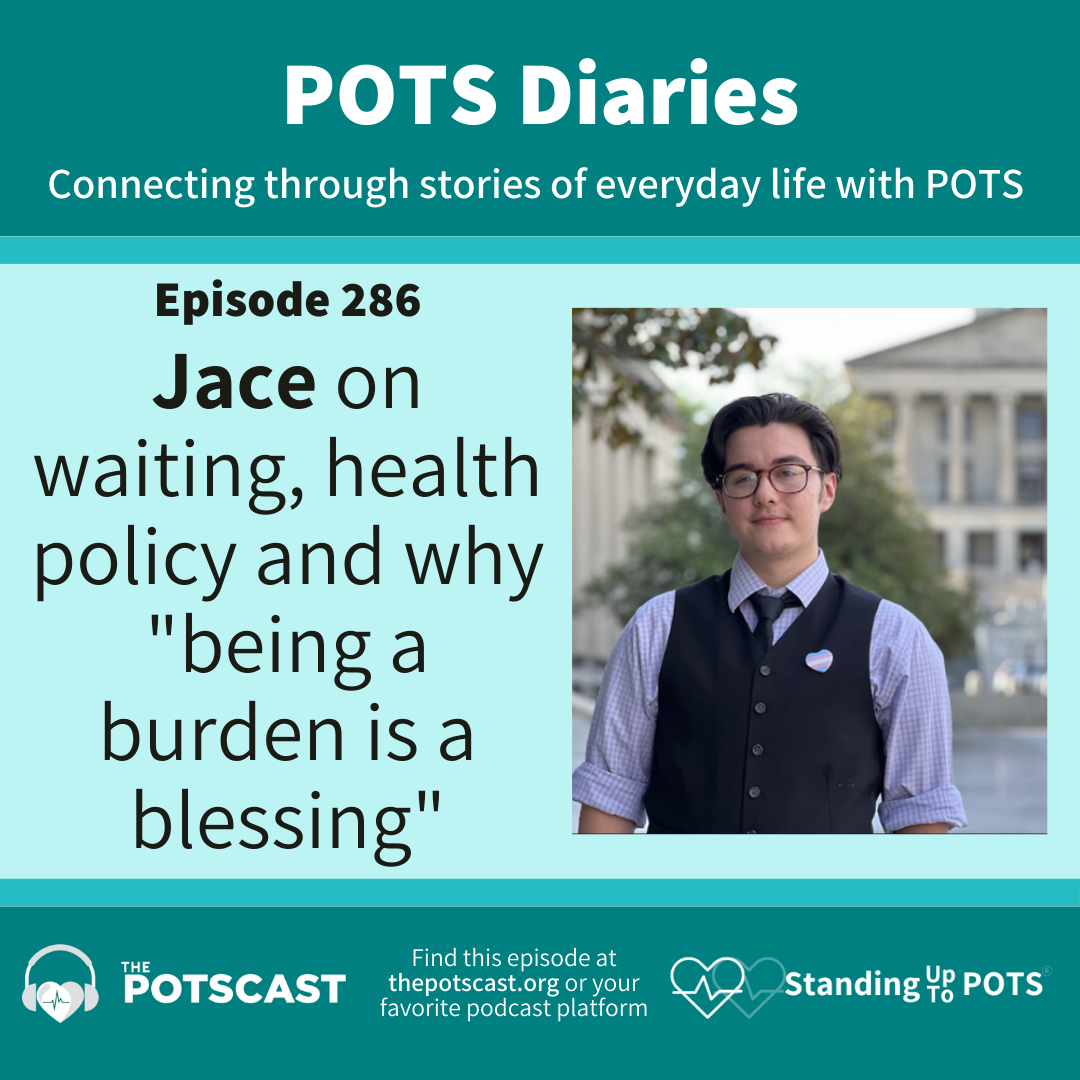
Now it's just, okay, well sometimes we do have to rely on people, and that's kind of the whole point of community. And one of the things that I was told [00:33:00] that I kept holding onto was, it's a blessing to be a burden, meaning that it's a blessing to burden others with your needs and your desires because that's what it means to be in community.
And so that also really changed my perspective on that too. But yeah, POTS has definitely changed my outlook on my life and all my relationships.
Jill Brook: Yeah. I like that. It's a blessing to be a burden. And, you know, it kind of reminds me that, I don't know, I know 10 or 20 years ago there was some, you know, book out there that was popular and it was all about how you, you were supposed to basically ask things of people and how your life is better the more you ask things of people, because then they'll feel okay asking things of you and you reciprocate. And it's exactly what you said, that that's how you build community. So it, the point of the book was just that, that people who are [00:34:00] so loathe to ask for help for anyone, or actually missing out on this reciprocity.
And I think that's just so wise. So how has your life changed now? What do you do for fun? What does your life look like? What limitations do you have 'cause of POTS, but what also have you figured out kind of, I don't know, works for you?
Jace: Yeah, so, I'm someone who uses mobility aids quite often because both the chronic pain from Ehlers-Danlos and for POTS symptoms.
And so that's something that I rely on a lot and how I kind of actually make it fun is the fact that I like to, like put stickers and stuff like that on all of my devices and try and just make it less medical, uh, make it more me. So that's definitely one of the ways that I've kind of mixed together fun with my needs.
But I also, I am someone who really enjoys doing little art projects. [00:35:00] So I do like dot art that you get at like Michael's or wherever. And I do like little paintings that are already kind of like pre-drawn out and stuff like that, 'cause I, I can't paint on my own. I'm just not very good at it. But I have fun doing it. And I like watching TV with my cat, so...
Jill Brook: Right on. What's the hardest thing about having POTS?
Jace: Definitely the limitation on energy, I think, because you know, we have to conserve our energy so much and we have to be so careful about not overextending ourselves as to not go into a flare that it's, it's sometimes really hard because I may want to really do something or really want to spend time, research something or whatever it is, and I may just not have the ability to do that because I only have so many spoons for the day.
And I think that that's [00:36:00] sometimes stressful because it also means that we have to like measure out what, what's possible while like your, your roommate or your friend or whoever is just doing it without having to think about it. And that can be really frustrating.
Jill Brook: Yeah. Yeah. What gives you strength to deal with this and helps you cope?
Jace: Definitely, definitely my loved ones give me a lot of strength into coping with this. Just having like their positivity in my life, even whenever I'm not feeling so positive about things is really helpful. And also just looking forward to different kind of things in the future is really helpful for me too.
So whether that's looking forward to a new comic book coming out, or if that's looking forward to just seeing another friend. Just finding those things that make me look forward to the future is also really helpful.
Jill Brook: [00:37:00] Yeah, smart. Is there anything that you know now about POTS that you wish you had known sooner?
Jace: I wish I'd known that it existed, first. Um, I really wish I knew that was, it existed sooner, but I wish that I had also known that it was okay to say no to different activities sooner, because I think that I still had in my mind of like, oh, I can still do all this. I can still do all this. And it took a while and some grieving to realize I can't do all of this, and that's okay.
And so I wish I had known that sooner that it was okay that I had to manage my energy differently.
Jill Brook: Mm-hmm. Has anything positive come from having POTS? Are there any silver linings?
Jace: I think that it's definitely pushed me into learning more about disability and disability law, and I think that that has made me both a [00:38:00] more empathetic person and also just better educated as an ally to other disabled people because now that I am considered myself as a disabled person, I am able to be in community with others who may not understand what I'm going through and I may not understand what they're going through, but we are both struggling for the same reasons.
Jill Brook: Right, right. So if you were to imagine your past self at your lowest point in terms of POTS, and I say that because I know we have listeners who tend to listen to this when they're at their absolute toughest times, what would you say to that version of yourself now that you have more time and experience?
Jace: I would say that you're not being a burden. You are doing the best that you can and your best is enough. Because I think that, for [00:39:00] myself, whenever I was at the lowest point in my POTS I was struggling so much just to, you know, get up and eat or get up to just do anything. And I was struggling so badly with symptoms and with the mental aspect that I just felt horrible about myself too. I think that it's a good reminder to just say that you're a human being, that, that's all that matters is that you're a human and you're being, so that's, that's what I would probably say.
Jill Brook: Yeah. And so, you know what is so interesting, I, I think a lot of us are so hard on ourselves and this will have been released by the time your episode is released, but I spoke to Dr. Jeffrey Boris yesterday about his patients and a lot of his data and findings, and he actually finally has real data showing that POTS patients are high [00:40:00] achievers and he had it because of graduation rates and rates of, um, graduating college, you know, despite chronic illness, they were very high. And so it was kind of good to get like some evidence that yeah, we're not just making that up. And I know a lot of people observe it and talk about it, but it's almost like we do have now some evidence that on average a lot of POTSies are working very hard and doing their best. So I think we don't have to be so hard on ourselves all the time.
Jace: Yeah. And that, that's really interesting. I, I totally believe that because, uh, like you said, like we've witnessed it ourselves. But yeah, I definitely am interested by that.
Jill Brook: So are you up for doing a speed round where you just say the first word that comes to your head?
Jace: Sure.
Jill Brook: What is your favorite way to get salt
Jace: LMNT.
Jill Brook: What is the drink that you find the most hydrating?
Jace: Also LMNT.
Jill Brook: What is your favorite [00:41:00] time of the day and why?
Jace: Probably nighttime because it is perfectly acceptable to be in bed. And also just settling down helps, uh, me just feel better about everything. So yeah.
Jill Brook: Where is your favorite place to spend time?
Jace: Probably my bed.
Jill Brook: How many doctors have you seen for what turned out to be POTS?
Jace: Oh goodness. At least, at least 15.
Jill Brook: How many other POTS patients have you ever met face to face in the flesh?
Jace: One.
Jill Brook: What is some good advice you try to live by?
Jace: One of the phrases that I've always loved, was that it's the very people that nobody imagines anything of that do the things that nobody can imagine. And I love that.
Jill Brook: I love that. That's great.
What is something small or [00:42:00] inexpensive that brings you comfort or joy?
Jace: Definitely my cat.
Jill Brook: Who is somebody that you admire?
Jace: I would have to say my friend, Em. They are an amazing and strong person and I just love them and appreciate everything that they do.
Jill Brook: Nice. What is something you're proud of?
Jace: I am proud of the work that I have done in policy and the work that I've done at the legislative level.
Jill Brook: What is the toughest thing about POTS?
Jace: I think that it could be how isolating it can be at times because you're not always surrounded by other POTSies, so not everyone understands what's going on with you or why you need to go lay down on the floor for the next 10 years. But yeah, that, I think that it's sometimes that it's isolating.
Jill Brook: What is an activity that you can enjoy even when you're feeling really POTSie?
Jace: Definitely just comic book time.
Jill Brook: [00:43:00] Do you have anything that helps you fall asleep?
Jace: My medication.
Jill Brook: Do you have anything that helps give you energy when you need it?
Jace: Probably shouldn't, but definitely a little bit of caffeine.
Jill Brook: What is a gift that you would give to every POTS patient on Earth if you had infinite funds
Jace: A lifetime subscription to LMNT or Liquid IV.
Jill Brook: What is something you are grateful for?
Jace: I'm grateful for all the people in my life that have supported me up until this point.
Jill Brook: Finish this sentence. I love it when...
Jace: I love it when I feel good.
Jill Brook: Have you ever had to sit down or lie down in a weird place because of POTS, and if so, where was the funniest?
Jace: Yes. I think that I had to sit down in a giant Costco, and I just was in the middle of an aisle, just like sitting there because I was like, I'm gonna pass out if I [00:44:00] don't. So yeah.
Jill Brook: How'd that go? People nice to you?
Jace: It just, it was just strange. Like, nobody, nobody really stopped or anything. They just kind of like went around me. But, um, it was, it was a time.
Jill Brook: Okay. Finish this sentence. People might suspect I'm a POTSie when.
Jace: They see me taking a salt shot.
Jill Brook: Okay. I just have a couple more questions. What do you wish more people knew about POTS?
Jace: I wish that they knew that it is very draining on people and that it's not just a, you know, heart disorder.
Uh, it, that it's a neurological disorder that affects the entire body.
Jill Brook: Yeah. And, is there anything you'd like to say to your fellow POTS patients out there listening?
Jace: I would say that you are your best advocate and that you deserve to be advocated for, [00:45:00] and that you don't have to be an expert in a field in order to do advocacy.
The whole point of any, you know, legislator, anybody, anything like that is that the average person should be a part of it. So don't feel it like your voice doesn't matter because it really does.
Jill Brook: Oh, awesome. Jace, thank you so much for sharing all of this with us, not only your story and your insights, but I feel like I, I learned a lot from you today, so I so appreciate it and I know that everybody listening is just wishing you all the best going forward.
Jace: Thank you.
Jill Brook: Okay, listeners, that's all for today, but we'll be back again next week. Until then, thank you for listening. Remember, you're not alone, and please join us again soon.